

Forensic examination of handwriting and documents — Tétouan, instructed throughout Morocco
A disputed document
is examined, not assumed.
Handwriting and signature examination, detection of forgery and counterfeiting, analysis of disputed instruments. A private practice equipped with the VSC 6000, instructed throughout the Kingdom by lawyers, companies, courts, notaries, financial institutions and private clients.
Sworn expert before the Court of Appeal of Tétouan
- The only private practice in Morocco equipped with the VSC 6000
- Instructed across the whole Kingdom
- Non-destructive examination, reasoned report produced in court
What an examination reveals
A cheque drawn for 480,000.00 MAD, with nothing to mark it out to the naked eye. Change the lamp, move the magnifying field across the exhibit: the examination is replayed in front of you.
To the naked eye nothing marks the document out: even handwriting, a legible amount, a signature that looks right. This is the state in which a forged cheque is presented at the counter.
- 1 Amount in dispute
Move the examination field over the exhibit: by finger, by mouse, or with the arrow keys.
A reconstruction made for demonstration: neither the exhibit nor the institution exists.
Practice areas
The practice is instructed in the following areas in particular. The list is not exhaustive.
-
Disputed handwriting and signatures
The questioned writing is set against known specimens to establish whether the same hand produced it.
-
Anonymous letters and writings
Identifying the author of an unsigned document by comparison with the handwriting of suspected persons.
-
Cheques, bills and instruments of exchange
Examination of signatures, amounts and dates; detection of additions or alterations made after drafting.
-
Banknotes and currency
Verification of security features and detection of counterfeiting, under ultraviolet and infrared light.
-
Manuscripts and historical documents
Non-destructive examination of substrates and inks, and consistency of the document with the period claimed.
-
Works of art
Examination of signatures, inks and supports; technical opinion on questions of attribution.
-
Products and goods
Verification of trademarks, labels and security features, against international standards.
A glimpse of the exhibits examined
-
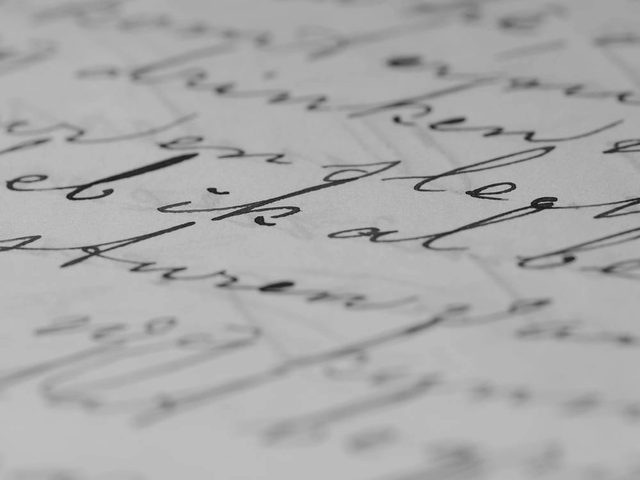
Handwriting and signatures -
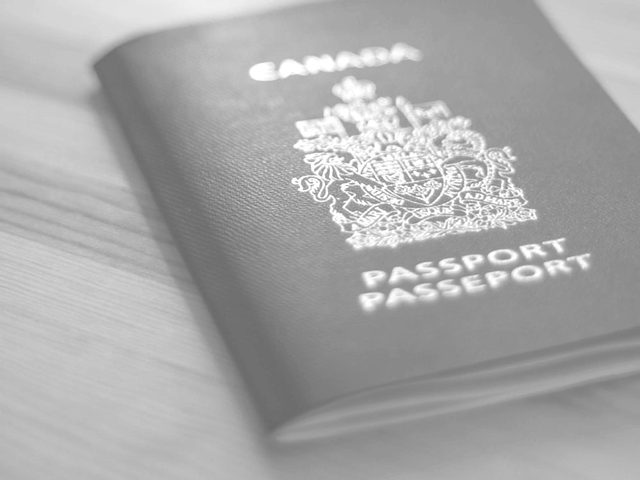
Identity documents -
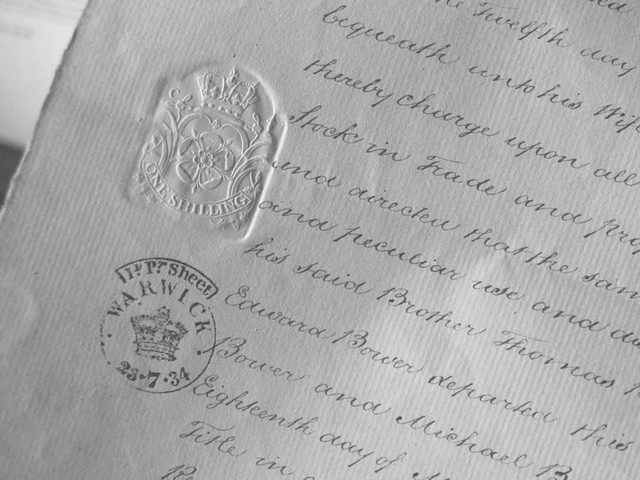
Seals and historical documents -

Banknotes -
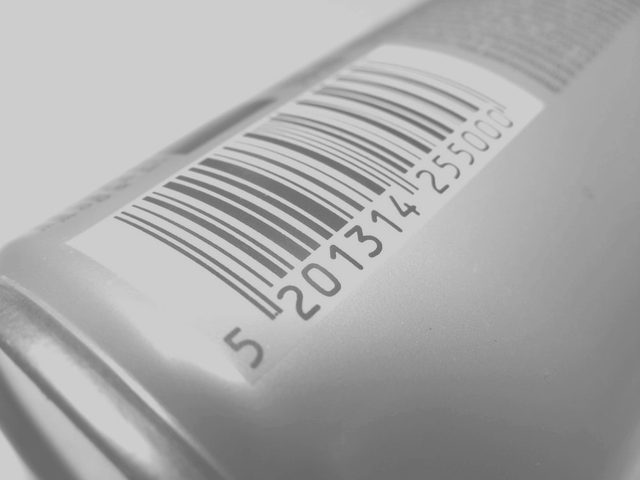
Products and trademarks


Who it serves
Who instructs the practice
A document that cannot be trusted troubles a legal department as much as it troubles an heir. The practice answers both, anywhere in the Kingdom.
-
Lawyers and in-house counsel
Technical opinion before proceedings are issued, rebuttal of a filed report, technical support during the hearing.
-
Companies
From small firms to large groups, across every sector: contracts, tenders, purchase orders, signatures of commitment.
-
Banks, insurers and credit institutions
Cheques, bills, credit files, claim declarations — wherever a document triggers a payment.
-
Notaries, adouls and property professionals
Powers of attorney, sale agreements, title deeds: a field backed by a Master’s in property law.
-
Courts and public authorities
Court-ordered or privately instructed work, reported so it can be understood, tested and relied upon.
-
Private clients
Estates, wills, acknowledgements of debt, family disputes: the same method and the same instruments.
Instructed across the whole Kingdom
The practice is based in Tétouan; instructions are carried out nationwide. Documents are handed over at the office or forwarded securely, and the expert evidence is produced before whichever court has jurisdiction.
Tétouan · Tangier · Rabat · Casablanca · Fez · Marrakesh · Oujda · Agadir · Laâyoune — and the rest of Morocco
Credentials
A dual background: forensic science on one side, property law and business management on the other.
-
Specialised training in forensic science
The Royal Gendarmerie Institute of Criminalistics — Administration of National Defence
-
University diploma in handwriting verification and detection of forgery and counterfeit
Specialised university diploma
-
Specialised Master’s in property law and business management
Specialised Master’s degree
Confidentiality
Documents entrusted to the practice are seen by the expert alone, and originals are returned to you intact.
Impartiality
The examination reports what the document reveals, for or against whoever commissioned it: that is what gives it weight before a judge.
Traceability
Every stage of the examination is dated, photographed and recorded on file.
Examination protocol
Four stages, from receipt of the exhibit to a report produced before the court.
-
Receipt and condition report
The exhibit is logged, its condition photographed, and its custody recorded from the very first moment.
-
Technical examination
Non-destructive examination under varied illumination: the original leaves exactly as it arrived.
-
Comparison and measurement
Systematic comparison against known specimens; every observation is measured, never assumed.
-
Reasoned report
An illustrated, quantified report, written to be understood, tested and relied upon by the court.
Instrumentation
An instrument that makes the document speak
The VSC 6000 video spectral comparator is a high-technology instrument dedicated to document analysis: it reveals forgery and alteration in cheques, banknotes, national identity cards and passports. The instrument used at the practice is the one relied upon by a number of security institutions in Morocco and abroad, including Interpol — the International Criminal Police Organization — and the national central bureaux of its member states.
The only private practice in Morocco equipped with the VSC 6000
The international reference in document analysis, available without going through a state laboratory.

Advantages and capabilities
Forgery detection
Reveals alterations, invisible inks and fibres through spectral analysis, under ultraviolet and infrared.
Non-destructive
Analyses the exhibit without altering it: the document is preserved, and the evidence with it.
Accuracy and reliability
Produces solid findings and detailed reports, admissible as evidence before a court.
Speed
Less time-consuming than conventional techniques, which moves the case forward faster.
Visual clarity
Renders images of a sharpness that makes the anomaly visible and demonstrable at the hearing.
Versatility
Fibres, handwriting, inks, substrates: one station for samples of very different natures.
Substrates examined
- Paper
- Leather
- Glass
- Textile
- Wood
- Metal
- Plastic
This range of substrates is what carries the examination beyond the paper document — labels, packaging, leathers, textiles — and therefore to the authentication of products and goods.
Key technical characteristics
- Optical magnification
- Up to ×130
- Ultraviolet
- Short, medium and long wave (254–365 nm)
- Spectral analysis
- Infrared absorption and luminescence
- Illumination
- Axial, oblique, transmitted and polarised
- Imaging
- HD camera with live and archived image overlay
- Method
- Non-destructive examination preserving the integrity of originals
Frequently asked questions
A disputed signature, a document suspected of forgery: answers to the questions most often asked.
What does a forensic document examiner do?
The expert examines disputed handwriting, signatures and instruments, compares them against known specimens, and produces a reasoned report for the court. The work is strictly technical: it describes what the document reveals, without taking a position on the dispute itself.
Are instructions accepted throughout Morocco?
Yes. The practice is based in Tétouan and the expert is sworn before the Court of Appeal of Tétouan, but instructions are carried out nationwide: Tétouan, Tangier, Rabat, Casablanca, Fez, Marrakesh, Oujda, Agadir, Laâyoune and other cities. Documents are handed over at the office or forwarded securely.
Does the practice work with companies and law firms?
Yes, they make up a substantial part of the practice: lawyers and in-house counsel, companies of every size and sector, banks, insurers and credit institutions, notaries and adouls, and public authorities. Work may form part of live proceedings or take the form of a confidential assessment beforehand.
What is the VSC 6000?
The video spectral comparator is a document examination station combining multispectral illumination (ultraviolet, infrared), optical magnification and high-definition imaging. It is the international reference in the field, in service with security institutions in Morocco and abroad as well as at Interpol. This is the only private practice in Morocco equipped with one.
Can a forged signature be proven?
In most cases, yes. A genuine signature is a reflex, executed quickly; an imitation is a drawing, slow and hesitant. The difference shows in speed, pressure and pen lifts — features that are measured rather than judged by impression.
Are land records examined?
Yes, and it is a field of specialisation: sale agreements, powers of attorney and title deeds. The dual background — forensic science and a Master’s in property law — allows the document to be read technically and legally at once.
Does the examination damage the original document?
No. The examination is non-destructive: the original is returned in exactly the condition in which it was entrusted, its state having been photographed on receipt.
How do I get started?
By a call or a message describing the nature of the document and the question at issue. Within two working days you will know whether an examination is worthwhile, and which comparison material to gather.
Contact
For a question, an appointment or an instruction — wherever you are in Morocco.
Telephone
06 71 75 71 47Hours
Monday to Friday — by appointment
Reply within two working days